Layout & mounting
- 1, 2, 3, or 4 sided screens
- Any length × width to match field dimensions
- Unit-mounted or post-mounted assemblies
- Moveable door locations sized for service panels
Products
Chillers · Cooling Towers · Condensers · Heat Pumps · Exhaust Fans · Specialty Equipment
Custom Rooftop Screening Built for Maintenance Access, Architectural Compliance, and Long-Term Durability
When screening shows up late
Screening was not in the original specs. The building is weeks from certificate of occupancy when the AHJ or owner asks for equipment to disappear from the street. Off-the-shelf panels rarely match curb lines, withstand wind and the elements, or fit the access path your service contractor needs.
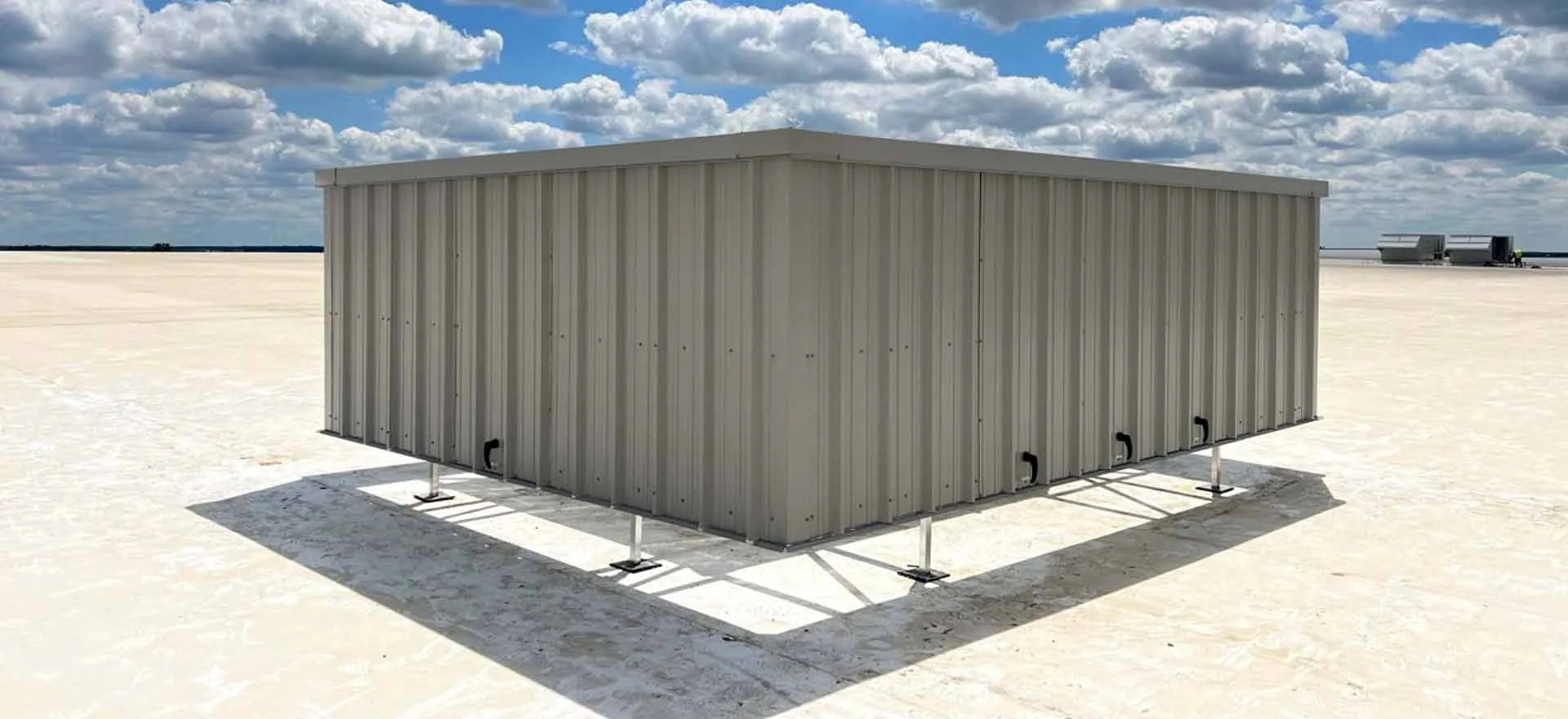
CME has fabricated custom rooftop screens for more than 20 years, from single package units to plant-level chillers and cooling towers. Every project gets a factory layout review: panel style, color, flashing, door locations, and mount type confirmed before fabrication, then cut and assembled at CME's Ponca City shop. Standard screens typically ship in 8 to 12 weeks; louvered systems run about 12 to 14 weeks.
Standard layout
Moveable door locations and side count are laid out around your equipment access plan, not added as a field afterthought.
Engineering & performance
Every CME rooftop screen is engineered for real wind exposure and configured to your equipment footprint — not pulled from a catalog module.
Standard screening systems are engineered to withstand wind speeds up to 120 mph.
Where project requirements exceed standard criteria, project-specific engineering is available based on the Engineer of Record's design requirements.
Standard heights up to 120 inches, with taller heights available when supported by project-specific engineering. Configurable as one-, two-, three-, four-sided, or combination screening.
What we screen
If it sits on the roof and the owner does not want it visible from the ground, we have likely built rooftop screens for something similar.
Large-footprint mechanical plant screening with panel lengths and widths built to your field dimensions, not a catalog module.
Tall, open assemblies where airflow paths and service access cannot be compromised for aesthetics or code compliance.
Low-profile and multi-unit layouts where coil access and rated airflow must stay clear through the screen frame.
Enclosures sized to curb layout with removable panels where technicians actually work on the equipment.
Custom heights, louvered panels, and door placements when standard screening would choke ventilation or block maintenance.
Non-standard rooftop gear — package units, custom skids, and plant-level layouts that need project-specific shop drawings.
Factory layout review
Every CME screening system starts with a layout review most competitors skip. Before anything is fabricated, we validate door swings, service access, and equipment clearances against the actual equipment and roof conditions — so the screen you receive doesn't get in the way of the equipment it's protecting.
Built to order
Panel style, color tier, and mount type are selected with your CME representative before we release drawings for fabrication. At layout confirmation, your project manager walks curb lines, door swings, and panel counts against the architect elevation so clearance gaps show up before steel is cut. Post-mounted versus unit-mounted decisions get locked in that review, not during install on a crowded roof.
Finishes
At a glance
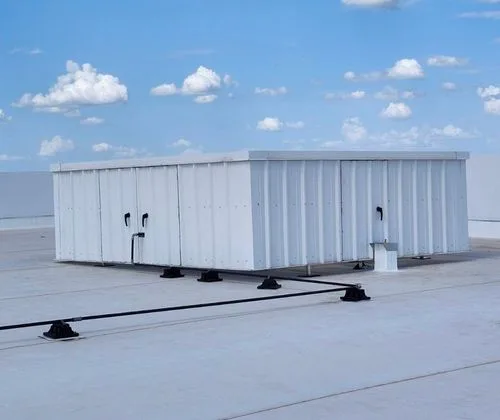
26-gauge steel siding and trim sized to your unit footprint, wind exposure, and elevation. No guessing at panel lengths on the roof.
Siliconized polyester finishes resist UV, rain, humidity, and abrasion. Color selection can be adjusted to meet local building requirements.
Removable panels and door locations placed so dampers, filters, and access panels open without fighting the screen frame.
Project support
CME provides project support from quote through installation — coordinating equipment data, shop drawing approval, fabrication, and delivery or installation so nothing falls through the cracks between departments.
By the numbers
Since 1999
Manufacturing custom rooftop equipment screening
Thousands
Of installations nationwide
Nationwide
Commercial, institutional, educational, healthcare, industrial, and government projects
For architects & engineers
CME's rooftop equipment screens are available as CSI Section 10 82 13 — Rooftop Equipment Screens, ready to drop into your project manual. Download our Basis of Design specification or full guide specification below.
Short-form spec for direct insertion into project manuals and bid documents.
Complete 3-part CSI-formatted guide spec (General, Products, Execution) with specifier notes for editing to project conditions.
How it works
Intake
Submit project information
Quote
Receive quote
Submittal
Once approved, submittal goes out for review
Layout
Confirm dimensions and access requirements
Approval
Approve drawings
Fabrication
Fabrication
Delivery
Delivery or installation
Why CME
CME can screen all equipment on a roof or just one side of a single unit. CME project managers stay on the job from layout confirmation through fabrication and install coordination, so the screen matches the equipment, the code path, and the architect's elevation. When screening lands weeks before certificate of occupancy, the factory layout gets locked before steel is cut so the enclosure ships while the GC still has crews on the roof. Screens are cut and assembled at CME's Ponca City shop by the same team that confirmed your field dimensions, then shipped to the job.
20+
Years fabricating rooftop screens
20+
Years fabricating rooftop screens
CME has screened single package units, plant-level chillers, cooling towers, and custom rooftop layouts across the continental U.S. That range covers late-add screening before certificate of occupancy, elevation matches for picky AHJs, and field-dimension jobs where catalog panels do not fit.
On this site
Explore other CME equipment built in the same Ponca City shop, or start a quote for your rooftop layout.
FAQ
Answers for contractors, specifying engineers, and building owners.
Chillers, cooling towers, condensers, heat pumps, exhaust fans, rooftop package units, and other specialty mechanical equipment. Layouts are built to your field dimensions, not pulled from a standard catalog size.
Standard screens typically take 8 to 12 weeks from approved layout. Louvered systems run about 12 to 14 weeks. Shorter timelines are sometimes possible depending on shop load; your CME representative confirms a project-specific range on the discovery call.
Unit-mounted screens attach to the curb or equipment frame. Post-mounted screens stand independent of the unit when weight, vibration, or layout requires it. CME reviews your rooftop plan and recommends the mount that keeps service access intact.
No. That is the point of the factory layout review. Louver panels, open sections, and removable doors are positioned so rated airflow paths stay clear and technicians can reach service panels without dismantling the entire screen.
Most projects are installed by the general contractor or mechanical contractor following CME drawings. CME also offers field installation or factory installation when your schedule requires a single responsible party on the roof.
Your CME representative provides current panel and color lists during layout. Standard, premium, and metallic color tiers are available, with custom color match when the owner needs an exact building finish.
Tell us what you need or call (866) 687-9803. We respond within one business day.